
Web App
Supply Chain Management
DAI is a global development consultancy working with governments, NGOs, and multinational companies to build inclusive, resilient economies worldwide. DAI’s Sustainable Business Group (SBG) helps clients align business growth with social impact by localizing supply chains and developing targeted social investment and financial inclusion programs tailored to local needs. One of its key tools is the Supplier Management Portal (SMP): a platform designed to help buyers source local suppliers and strengthen their social license to operate.
We were brought in to redesign the legacy local content reporting capabilities, used to track what quantity of labor, goods, and services are sourced locally, and integrate them directly into the SMP for a more cohesive experience. Our goal was to create a more intuitive, transparent, and scalable reporting tool that enables companies to meet regulatory requirements and build stronger relationships with host governments and communities.
Previously, local content data was scattered across countless Excel sheets, with aggregation and analysis handled manually: a time-consuming and error-prone process.
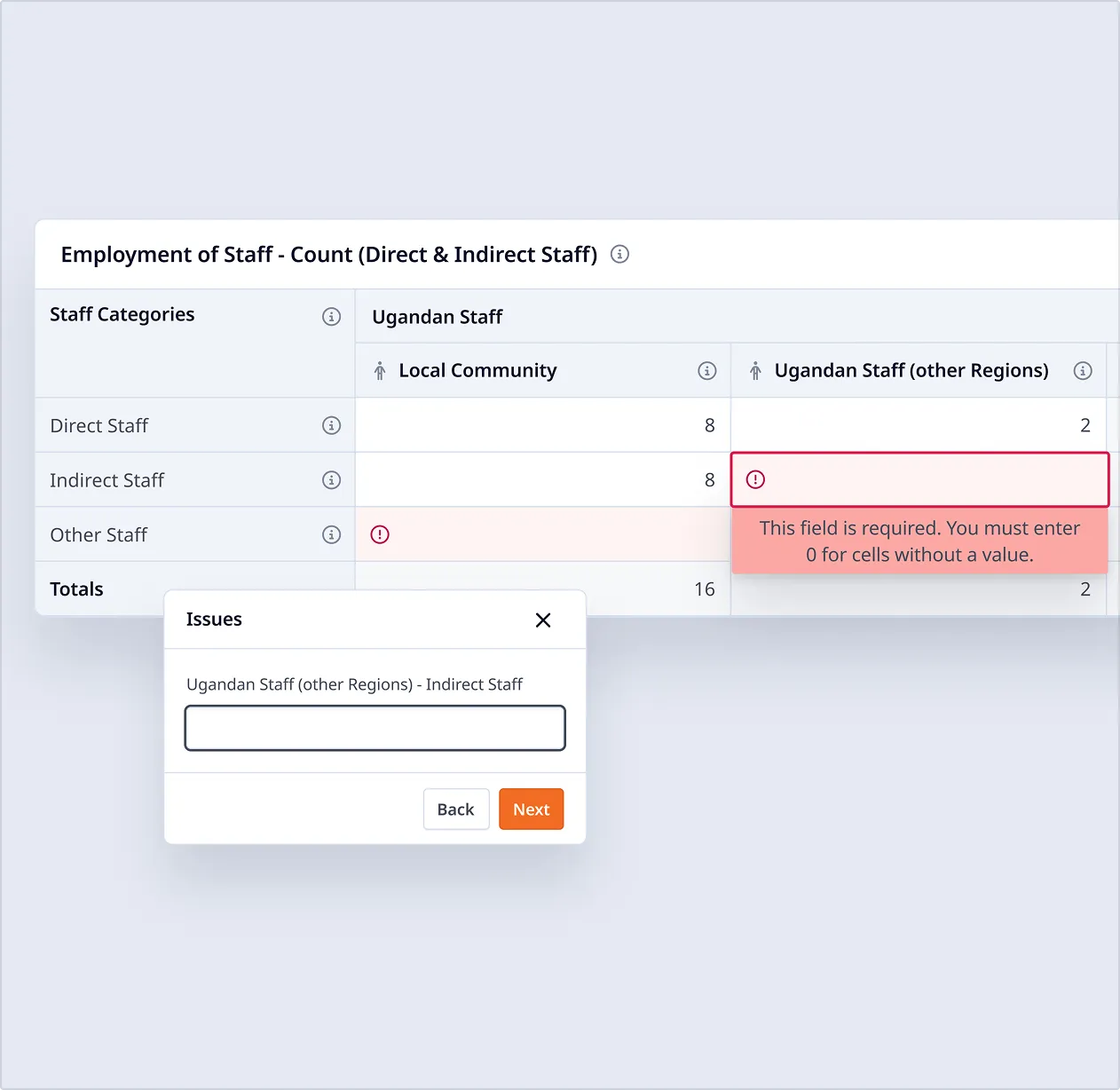
We introduced a centralized reporting workflow that starts with structured supplier input. For users with limited connectivity, suppliers can also download a template, fill it out in Excel, and re-upload it to the platform. Built-in data validation ensures submissions are complete and accurate: eliminating the need for manual cleanup and laying the foundation for reliable, scalable reporting.
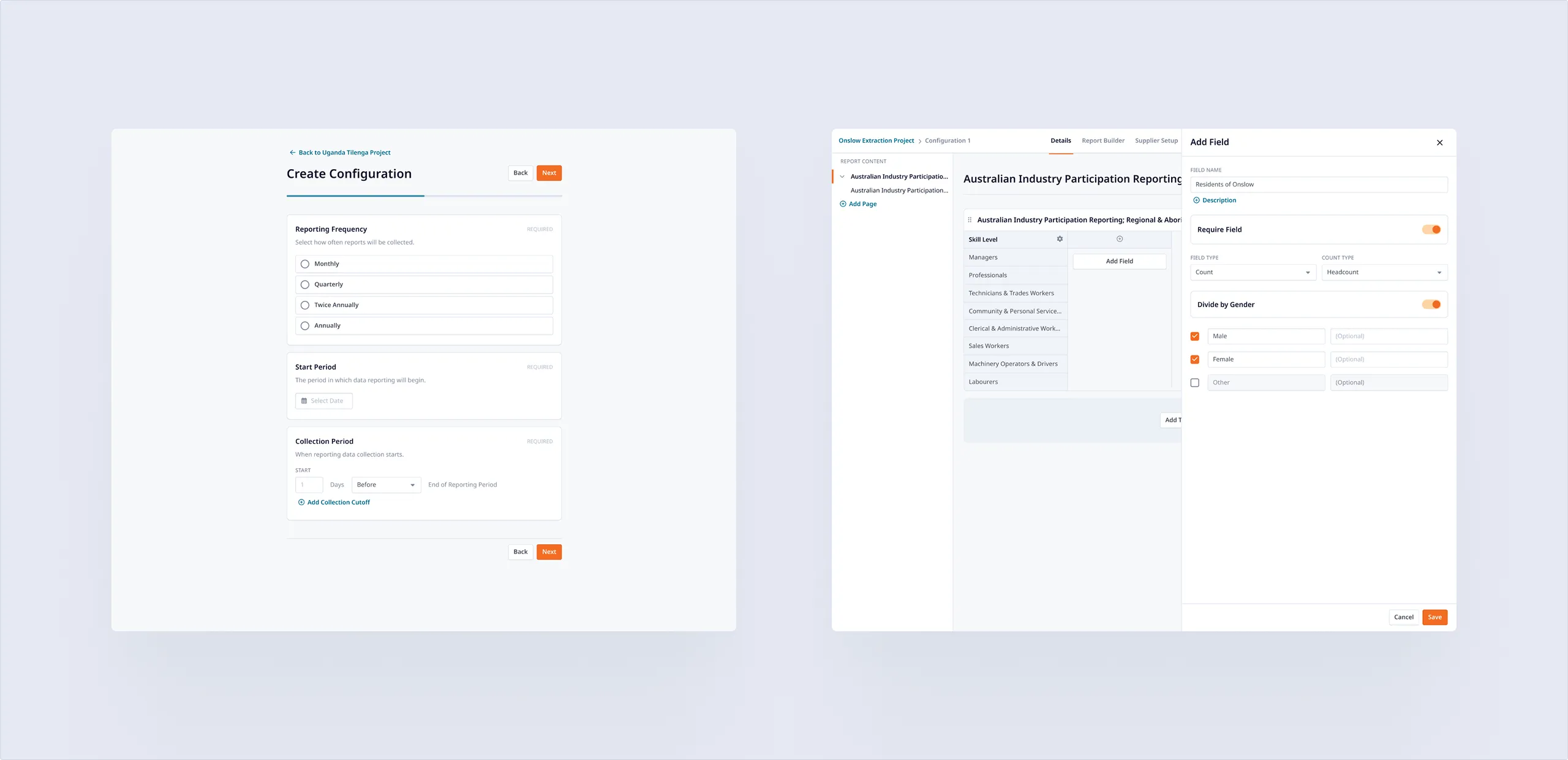
Reporting needs change: from one region to another, and over time. To support this, we created Report Builder: a fully configurable, no-code tool that enables the DAI admin team to define reporting structures without requiring developer support.
Everything is adjustable: reporting frequency, cutoff dates, table formats, and fields. Columns can capture any data type, from simple counts to multi-select inputs, with aggregation logic defined at the table level.
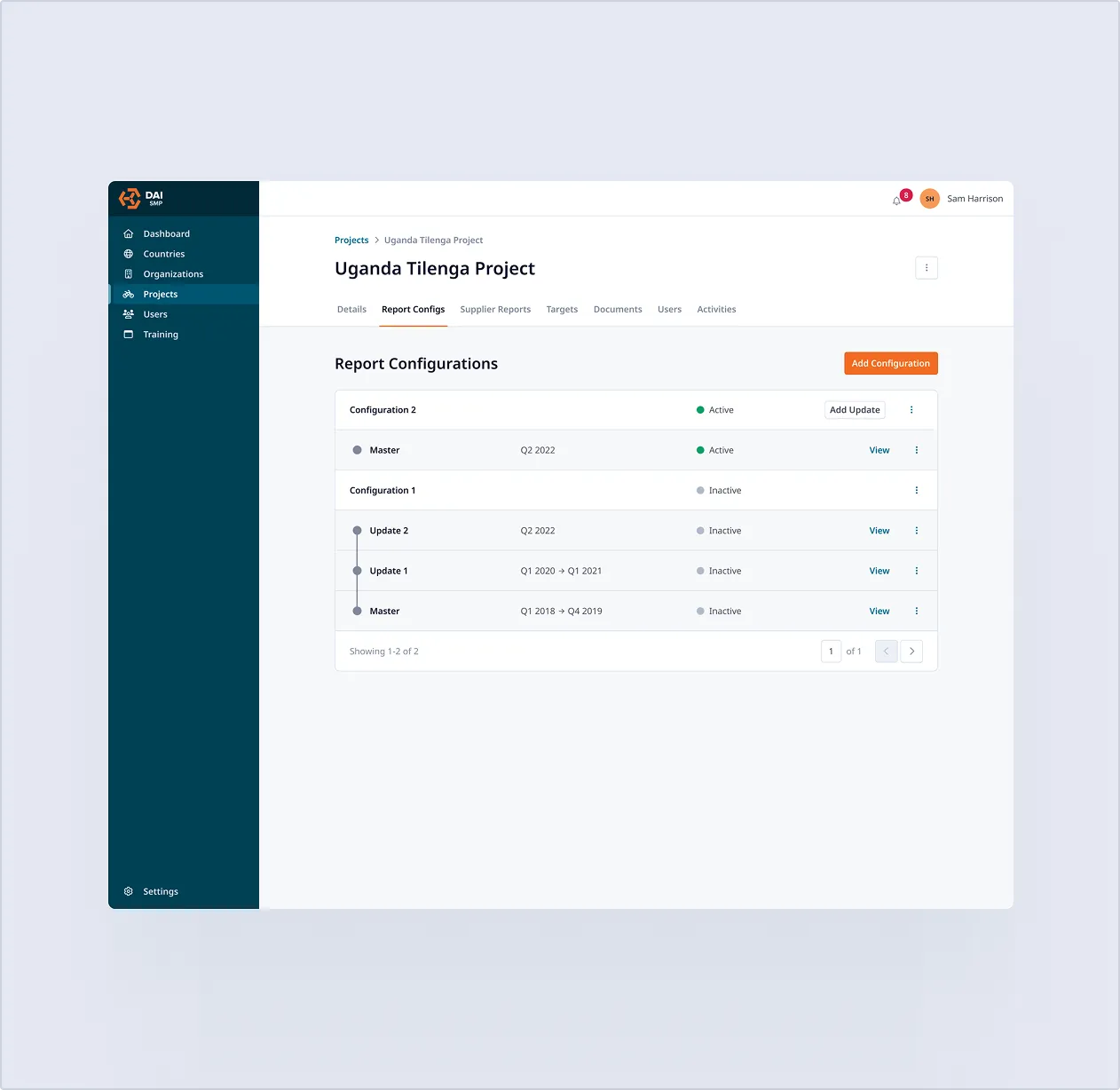
When reporting needs evolve, users can update configurations or spin up new ones: without disrupting data continuity. There are extensive aliasing capabilities to allow for multi-project data aggregation while preserving regional terminology and needs. Built from real use cases, Report Builder now powers 98% of new client reporting setups.
In large-scale project ecosystems, understanding the full local content landscape of the supply chain is critical. We designed an interface that clearly visualizes any buyer’s complete downstream supply chain: across all tiers and reporting periods.
The local content compliance experts at buyer organizations can easily manage their supplier tree structure to fit the reporting reality and view submissions over time.
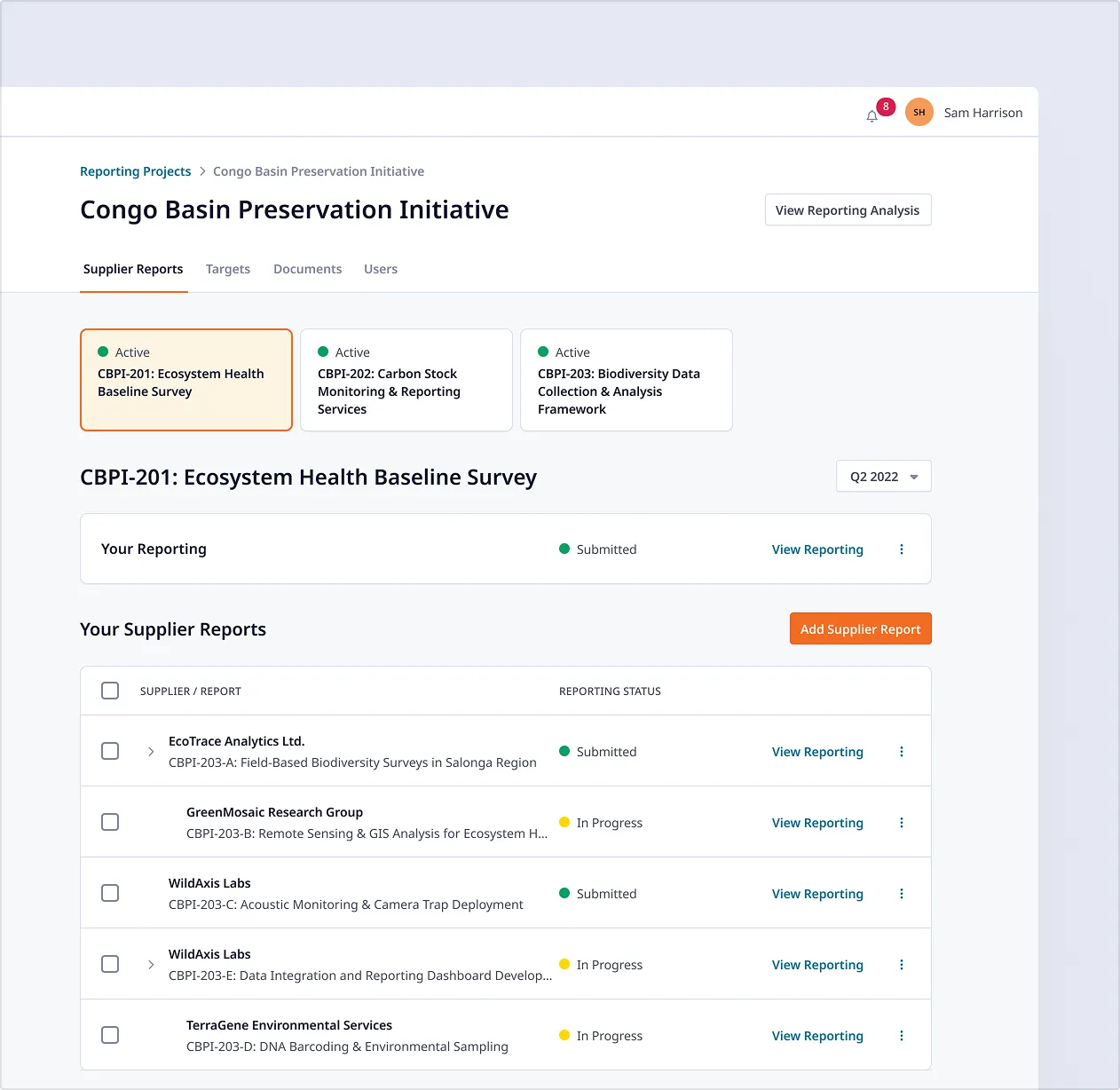
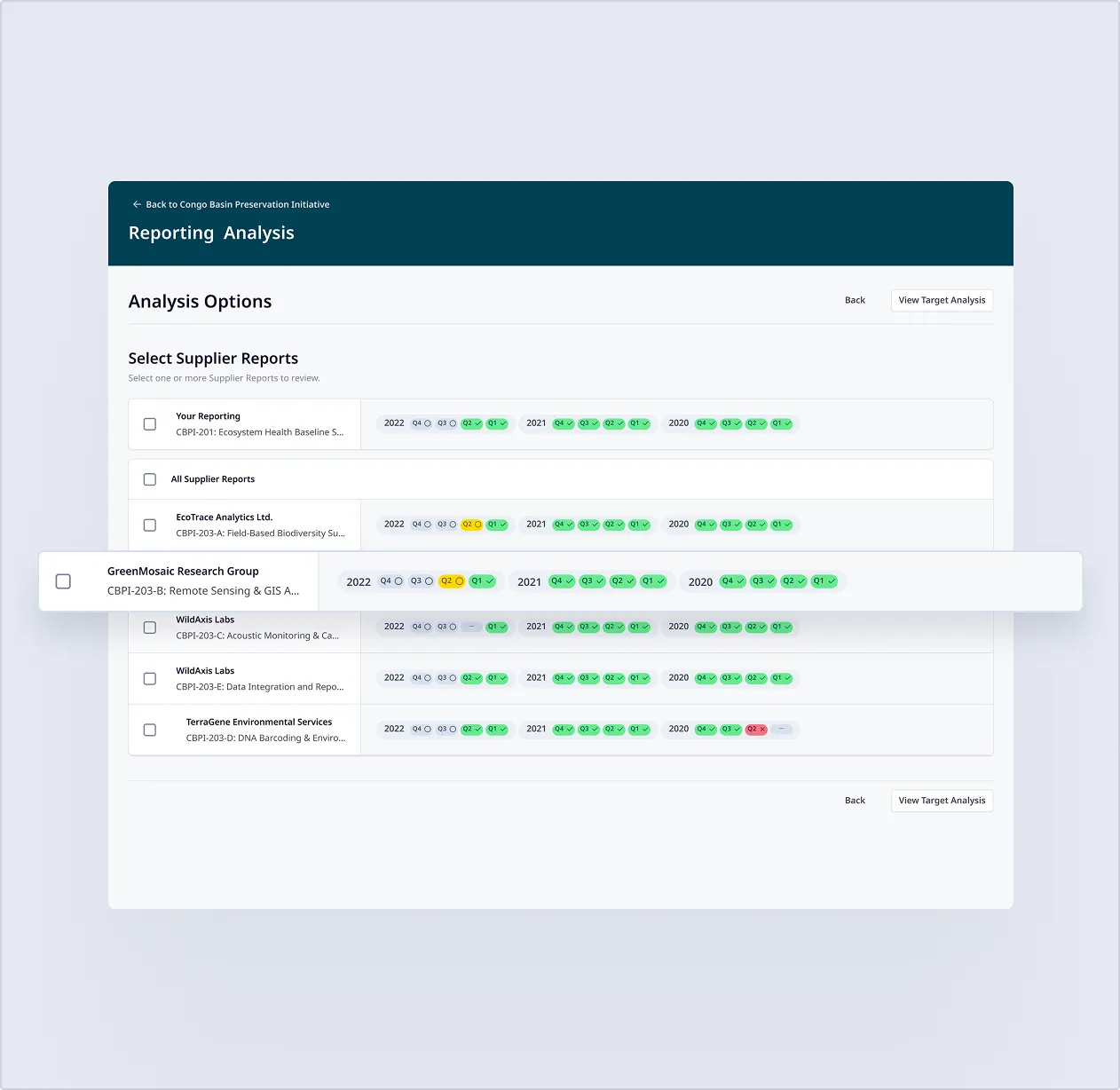
We designed a visualization that shows the submission status of each supplier report within a given period, so buyers can immediately see which reports are complete, pending, or missing.
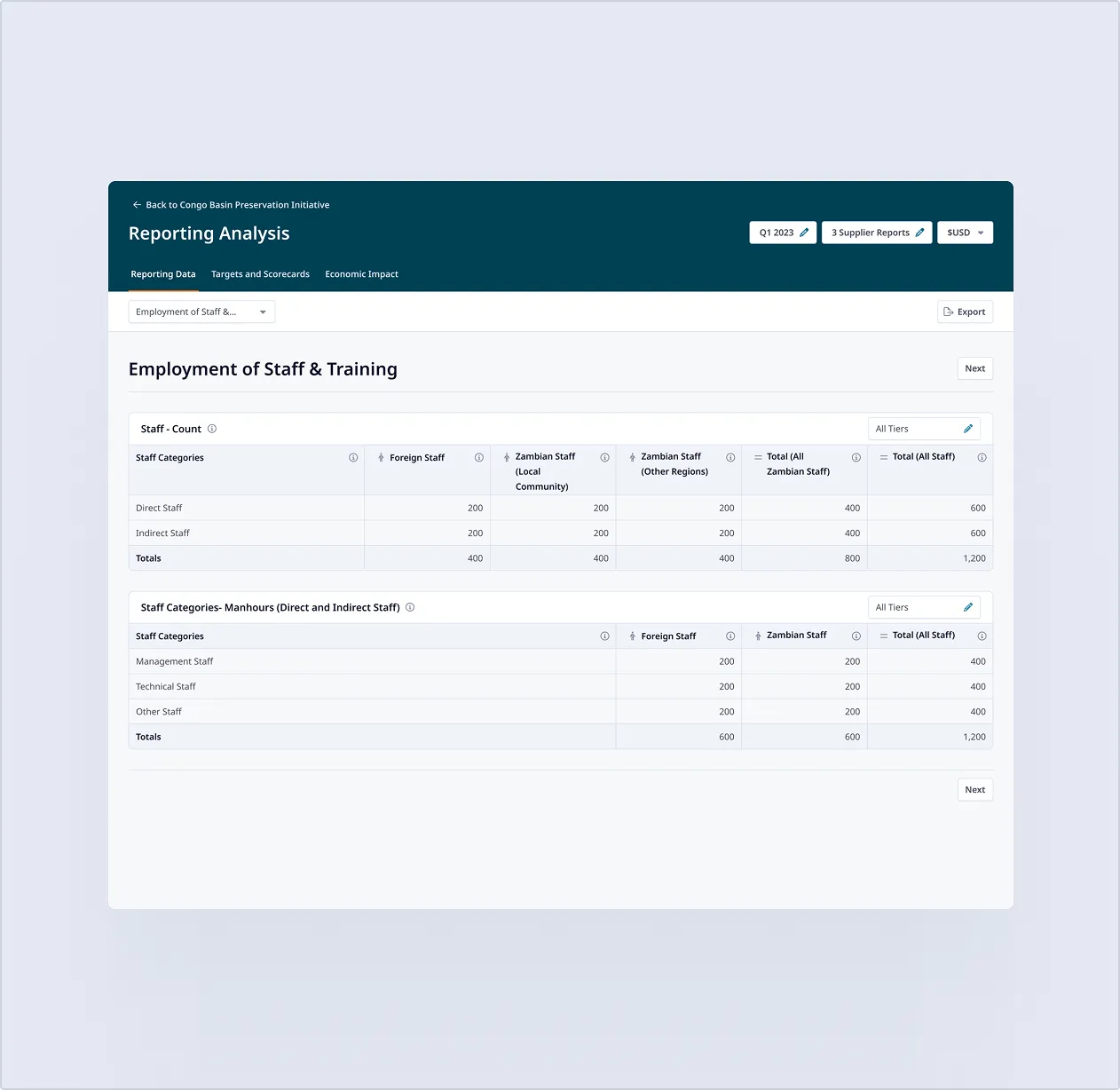
Once buyers select the relevant reporting periods and supplier reports, the system seamlessly aggregates the data into a full local content report. The result is a faster, more intuitive workflow that streamlines the complex reporting aggregation task.
The tool gives buyers the flexibility to aggregate any combination of supplier reports and reporting periods as long as they share the same report configuration.
This adaptability means buyers can generate exactly the analysis they need to satisfy compliance requirements, answer internal questions, or demonstrate local impact to external stakeholders.
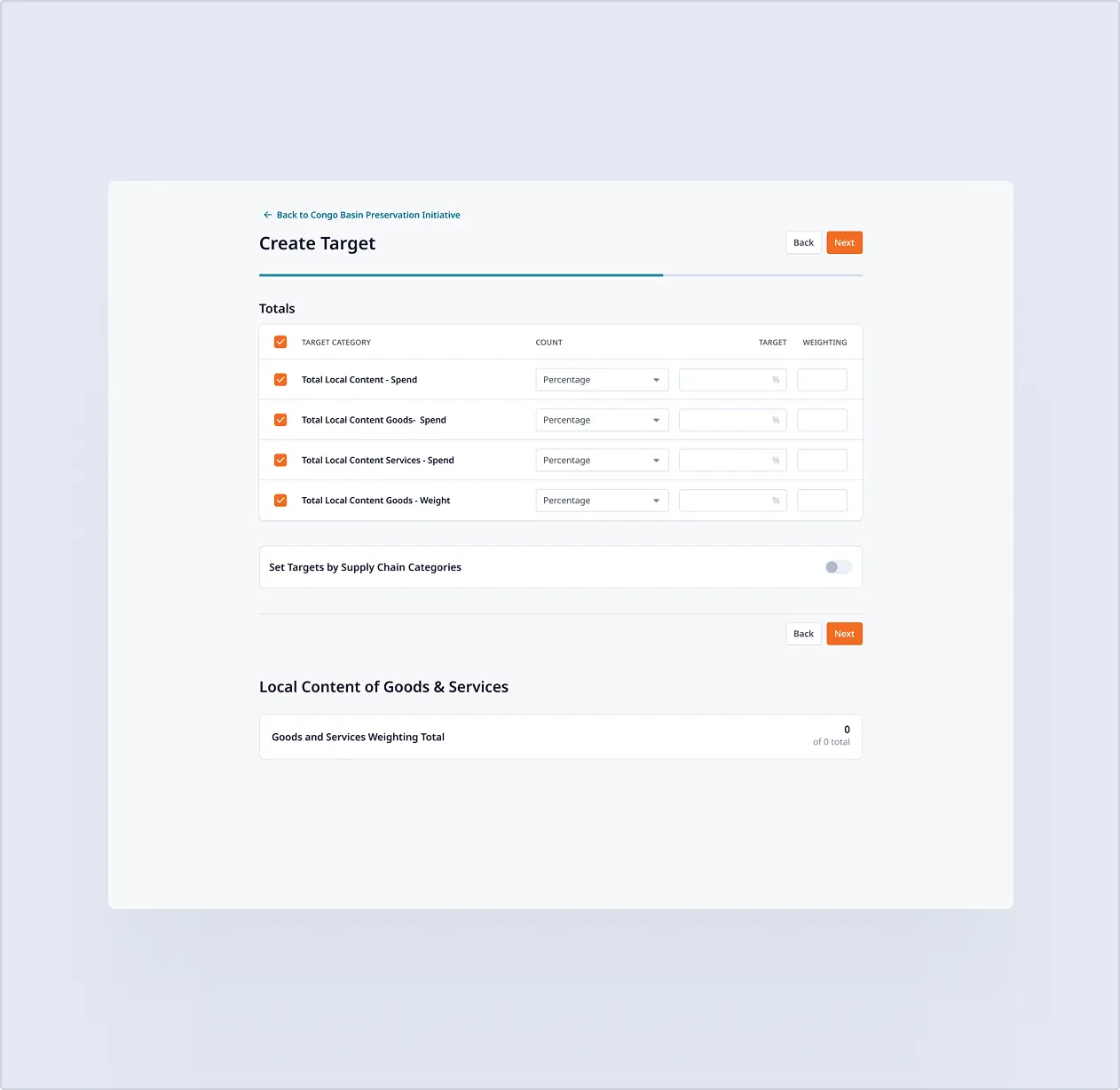
In many projects, buyers are accountable to the national or local government of the region in which they operate and must demonstrate that they’re meeting commitments to hire locally and purchase from local suppliers. The Target feature in SMP was designed to bring clarity and structure to this process.
Buyers can now easily create specific local content targets by category, such as spend, workforce, or goods weight: tailored to different supply chain sectors.
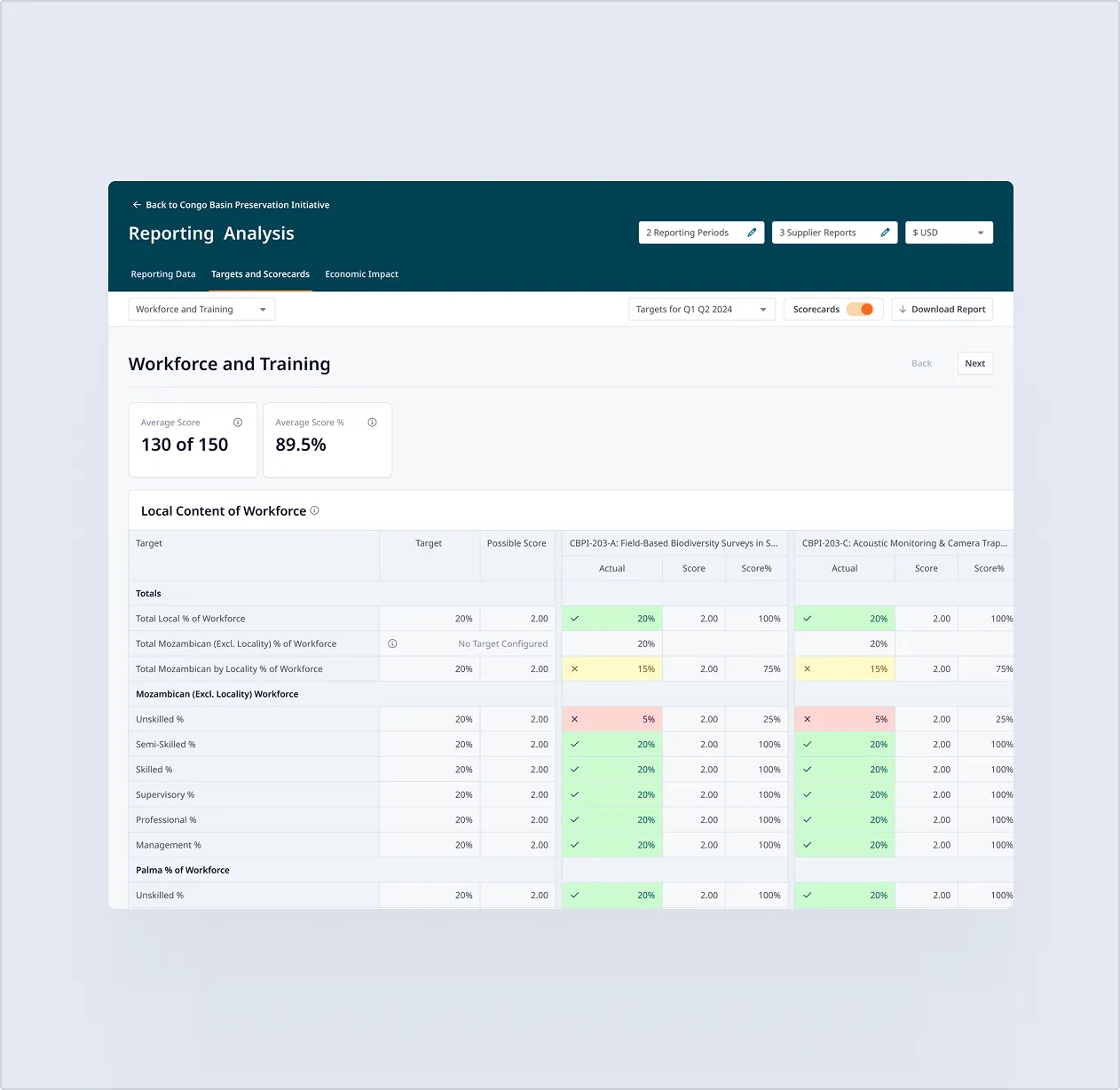
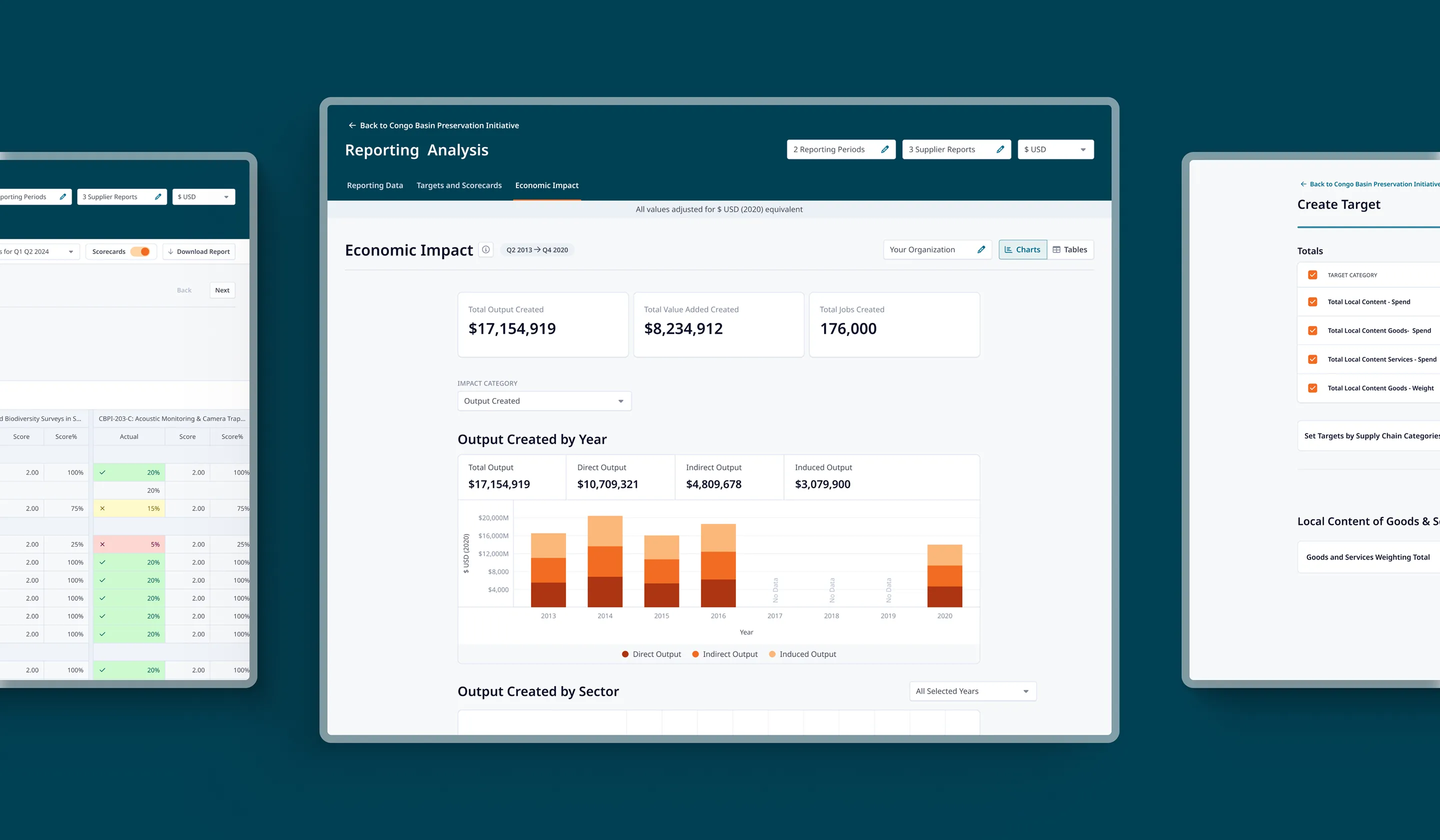
To support accountability, these targets are seamlessly integrated into the Reporting Analysis view. Buyers can instantly see how they and suppliers are performing against predefined targets across reporting periods.
Aggregated data powers clear scorecards, reducing complexity and enabling buyers to focus on strategic decisions rather than manual tracking. The result is a system that not only makes target setting easy, but turns it into an actionable part of daily operations.
Local governments often ask a simple question: What difference did this project make to the local economy?
The Economic Impact module brings clarity to that question. Embedded directly within the Reporting Analysis experience, it illustrates the operation’s footprint, highlighting the jobs supported, value created, and output generated across the supply chain over a defined timeframe. With the insights displayed through streamlined charts and well-structured tables, the data is easy to interpret and act upon.
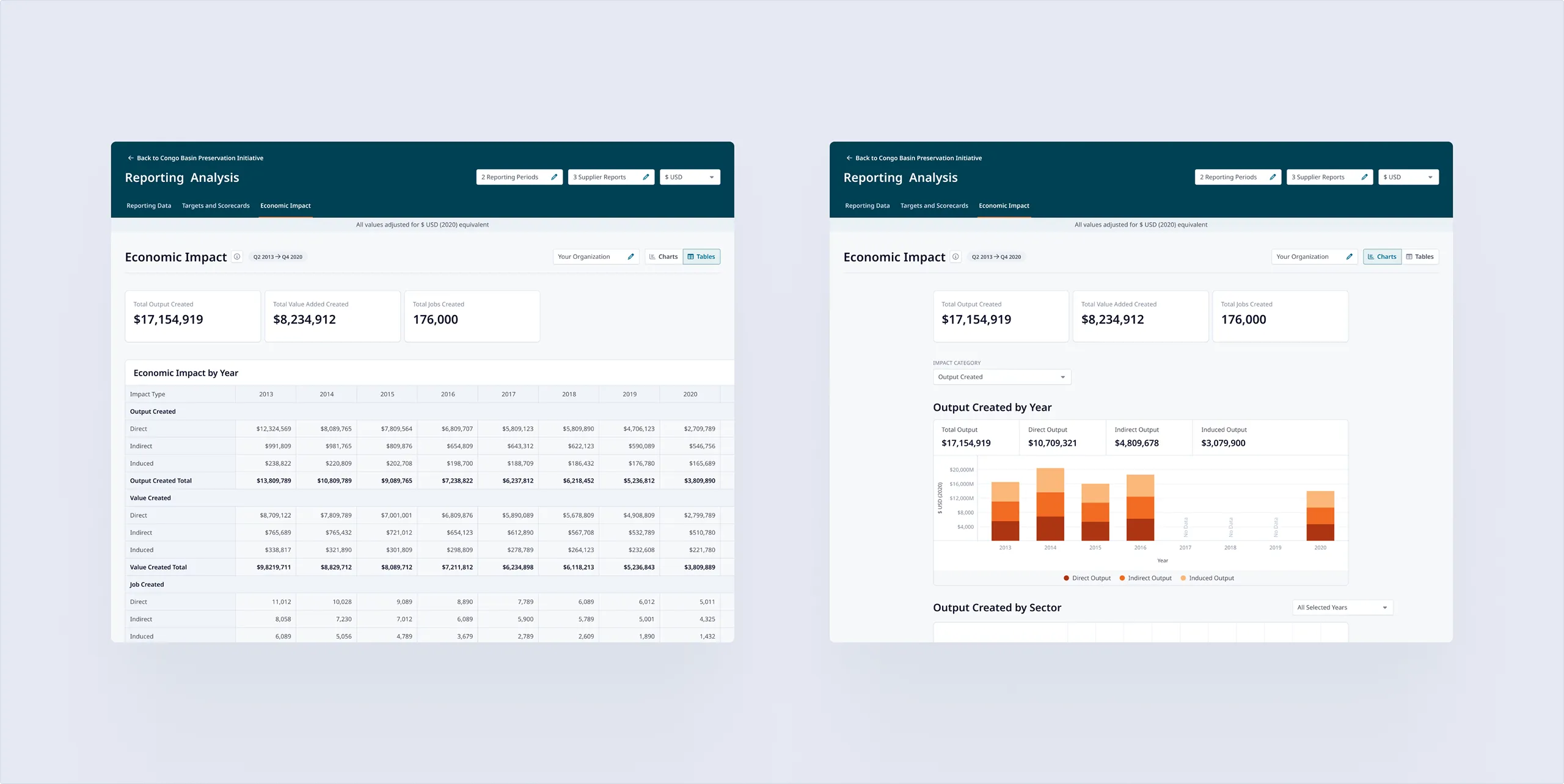
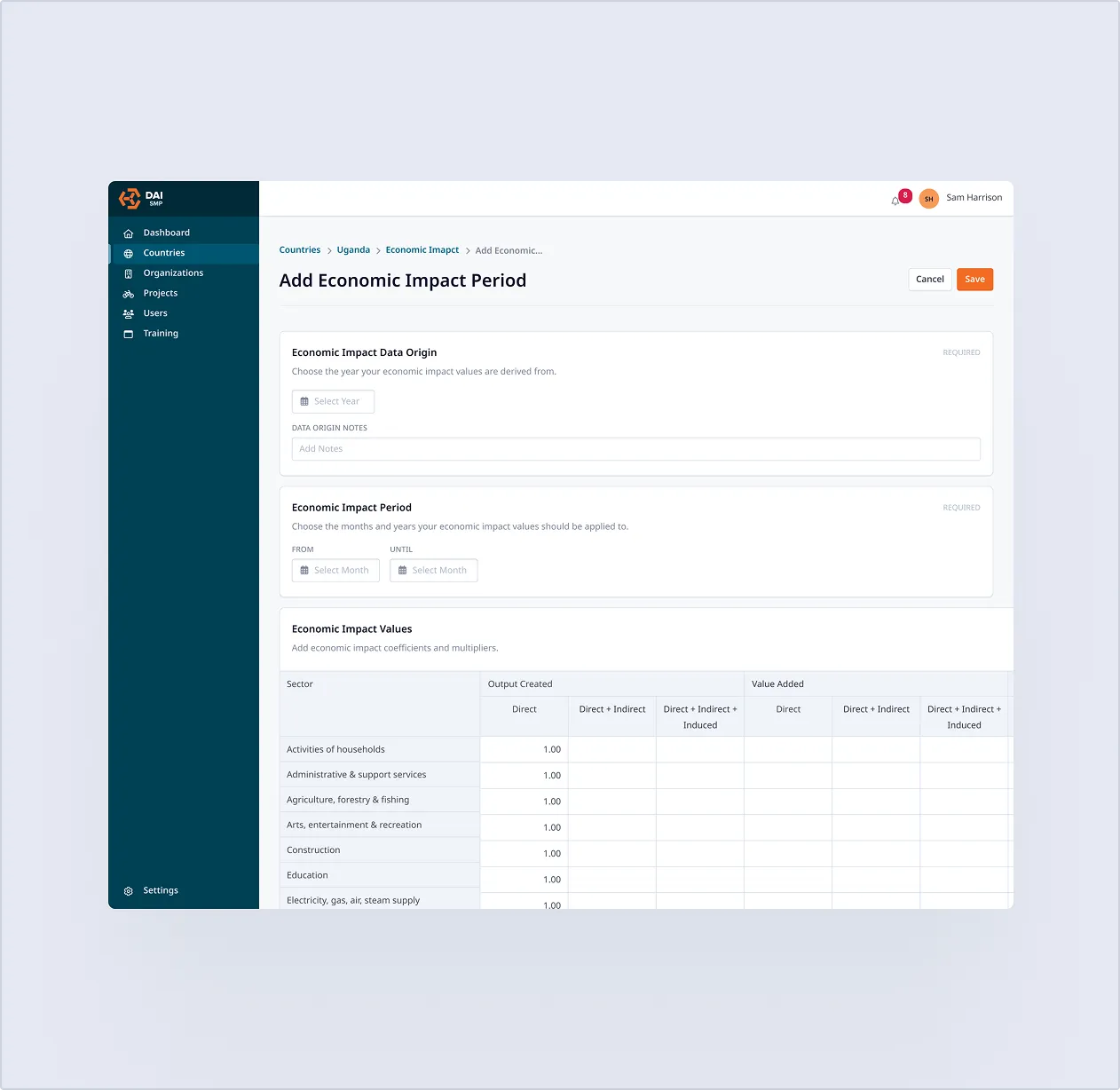
Behind the scenes, the calculations are powered by a model developed by DAI’s team of international development economists. Because no two regions are the same, we built flexibility into the admin settings, allowing teams to adjust coefficients and tailor the model to local realities.
The dashboard gives executives and senior leaders a clear, high-level view of supplier reporting and spending across local, national, and foreign sources with in a project or across multiple projects.
With live status updates and visual breakdowns, they can quickly gauge progress, spot gaps, and confirm compliance, without needing to dive into the granular details.
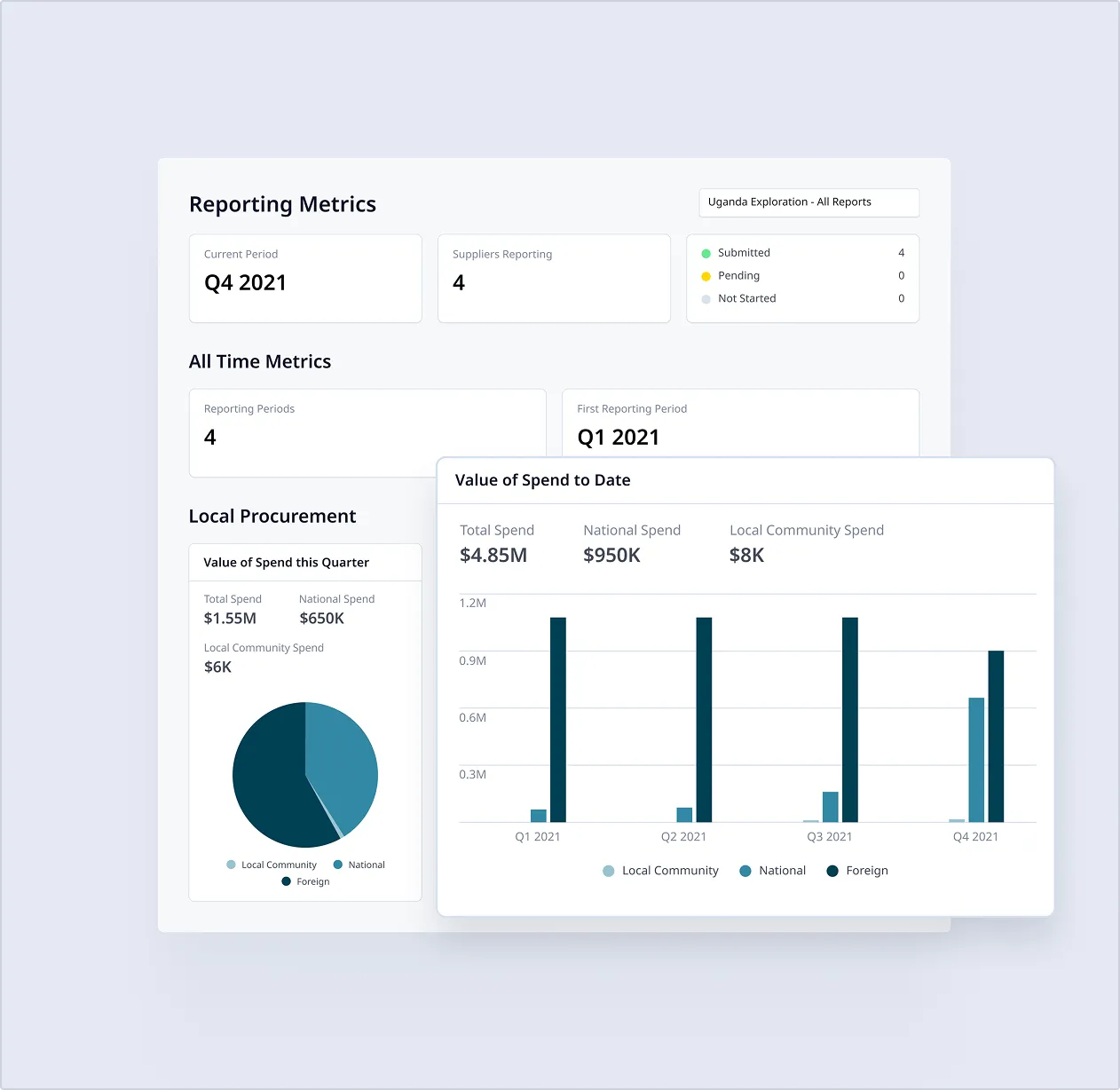
The redesigned reporting experience transformed how buyers and suppliers engage with local content data. What was once a fragmented, manual process is now streamlined, visual, and adaptive.
DAI teams gained full control: able to configure, launch, and adjust reporting requirements without engineering support. Buyers access clear insights on local spend and economic impact, improving transparency with local authorities. Suppliers, in turn, are guided through a simpler submission flow, increasing completion rates and data reliability.
What began as a compliance tool has become a platform for visibility, accountability, and smarter decisions at scale.


