

Mobile App
Gaming
Vizzy is a new gaming platform dedicated to emoji-based puzzles and social play. At its core, a Vizzy is a curated sequence of emojis that serves as a visual phrase players decode using logic and cultural context like Pictionary.
The game hosts a diverse library of challenges, ranging from the daily "Vizzy of the Day" to “CrossVizzy” crossword grids and rapid-fire “Quickplays”. Designed for connection, the app also features a competitive Versus mode, allowing players to go head-to-head to see who can decode phrases the fastest.
By blending various modes into one cohesive ecosystem, Vizzy transforms modern digital symbols into a universal language for play and social engagement.
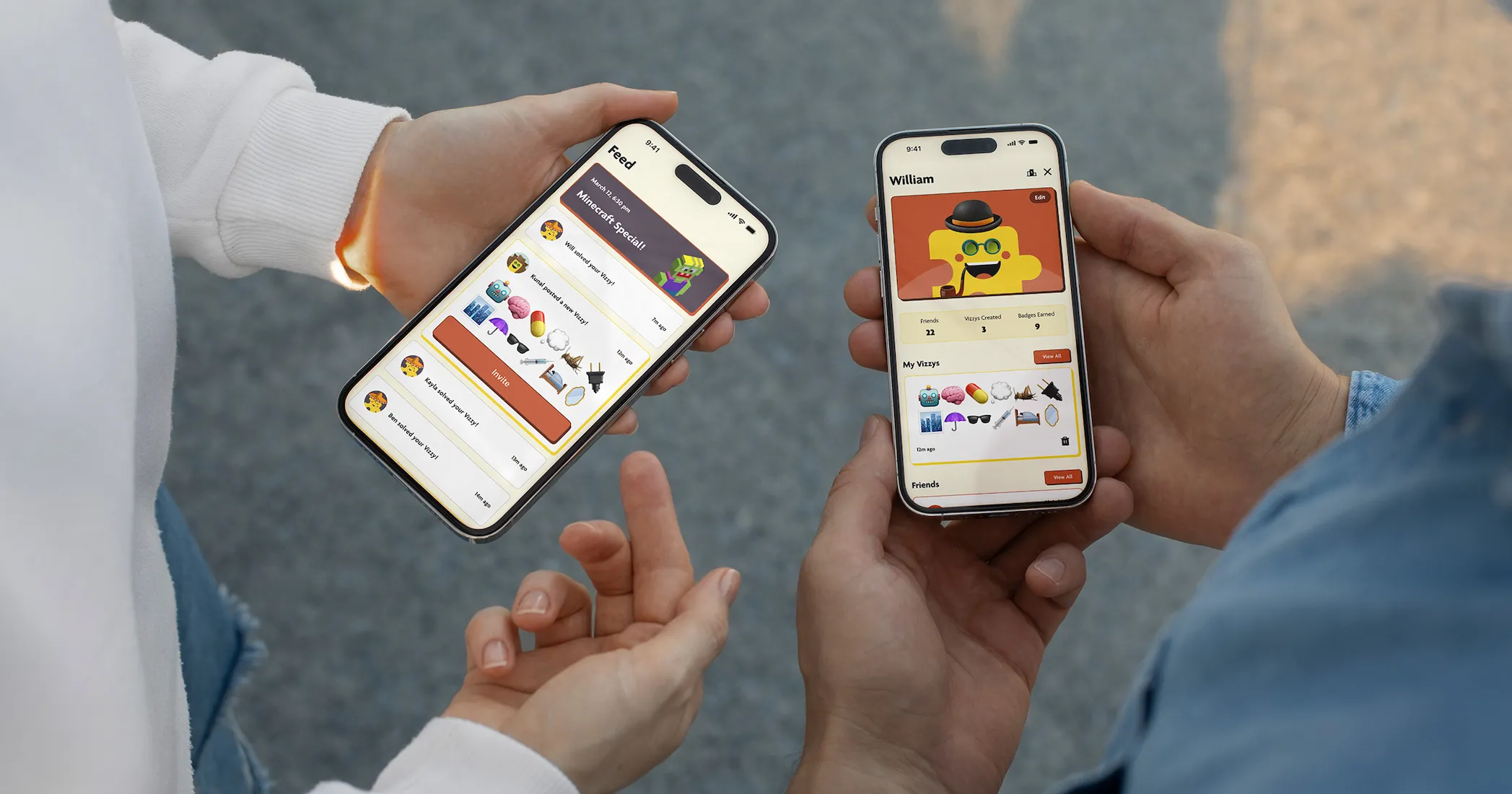
We designed a scalable gaming app vetted with real users and ready for software implementation. The final deliverables included a cohesive brand system, marketing collateral, production-ready UI, and an interactive prototype that simulates real gameplay logic, user progression, and social play across multiple modes.

Perpetual’s work was excellent. I really enjoyed working with them. They were a bright team that was passionate about my project. They didn’t just check boxes; they were thoughtful about their approach to what I was building.
We applied a disciplined, end-to-end design process to turn the Vizzy idea into a validated high-fidelity prototype. We aligned business goals and user personas through research, then defined clear user flows across gameplay, social, and commerce.
We rapidly explored and refined mechanics into wireframes before establishing a cohesive brand system. Finally, we built a functional Figma prototype that simulates real win/loss states and validated playability and visual appeal through user testing to ensure market readiness.
Our process began with the stakeholder’s vision and a deep dive into the competitive landscape to ensure Vizzy filled a unique gap in the mobile gaming market.
We conducted a thorough competitive audit, benchmarking popular emoji-based puzzle games and larger imagery-driven platforms. We specifically looked for apps that felt attuned to our bright and social theme.
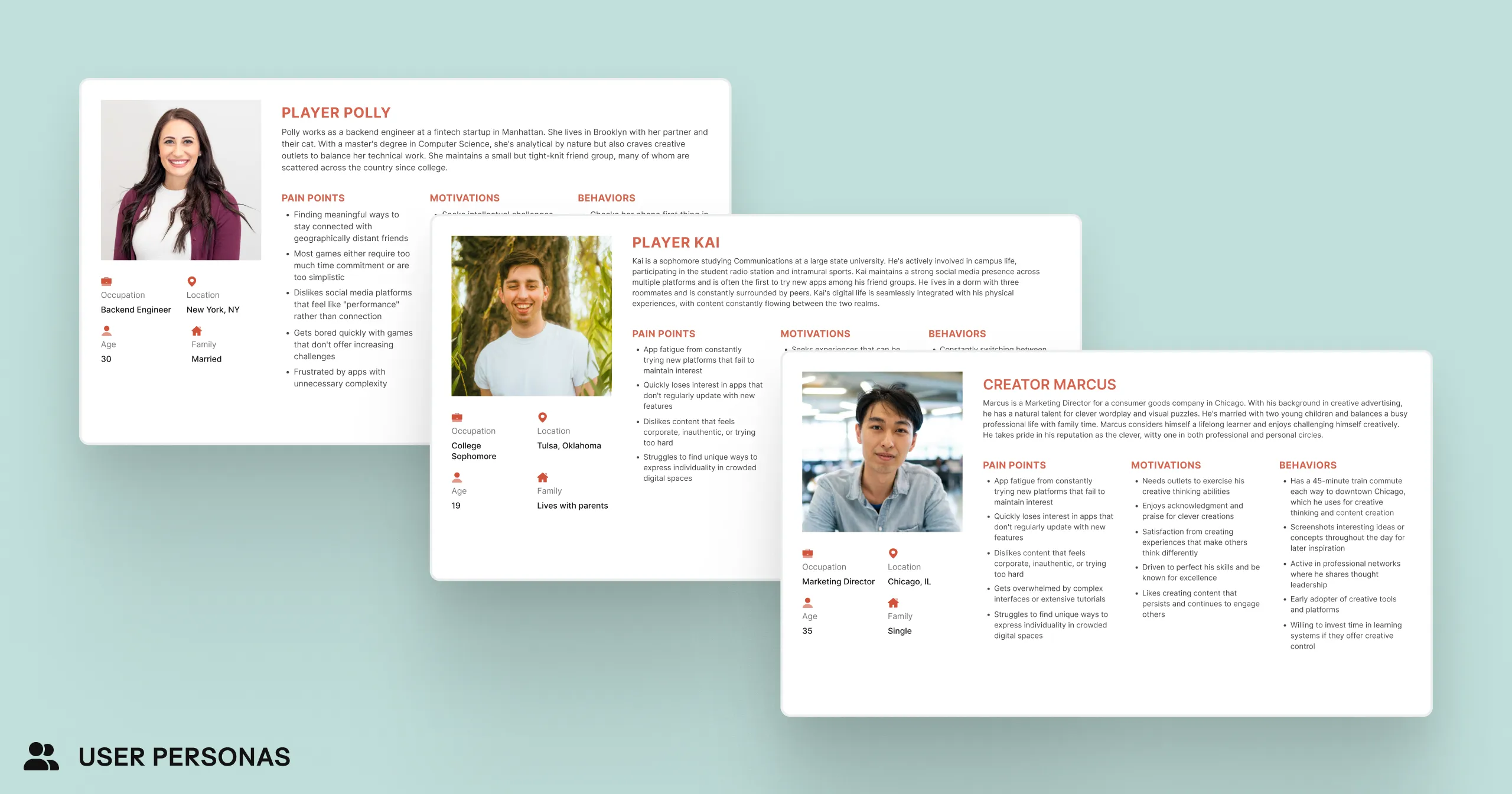
We translated these findings into user personas, ensuring every feature addressed the specific motivations and pain points of our target audience.
With our users defined, we mapped out a robust Information Architecture to organize the app's complex features. We then drafted user journey flows to visualize how a player would move from the initial 'Vizzy of the Day' challenge to exploring the feed and eventually the shop. This structural foundation ensured that, despite the app's multi-faceted nature, the user experience remained intuitive and goal-oriented.
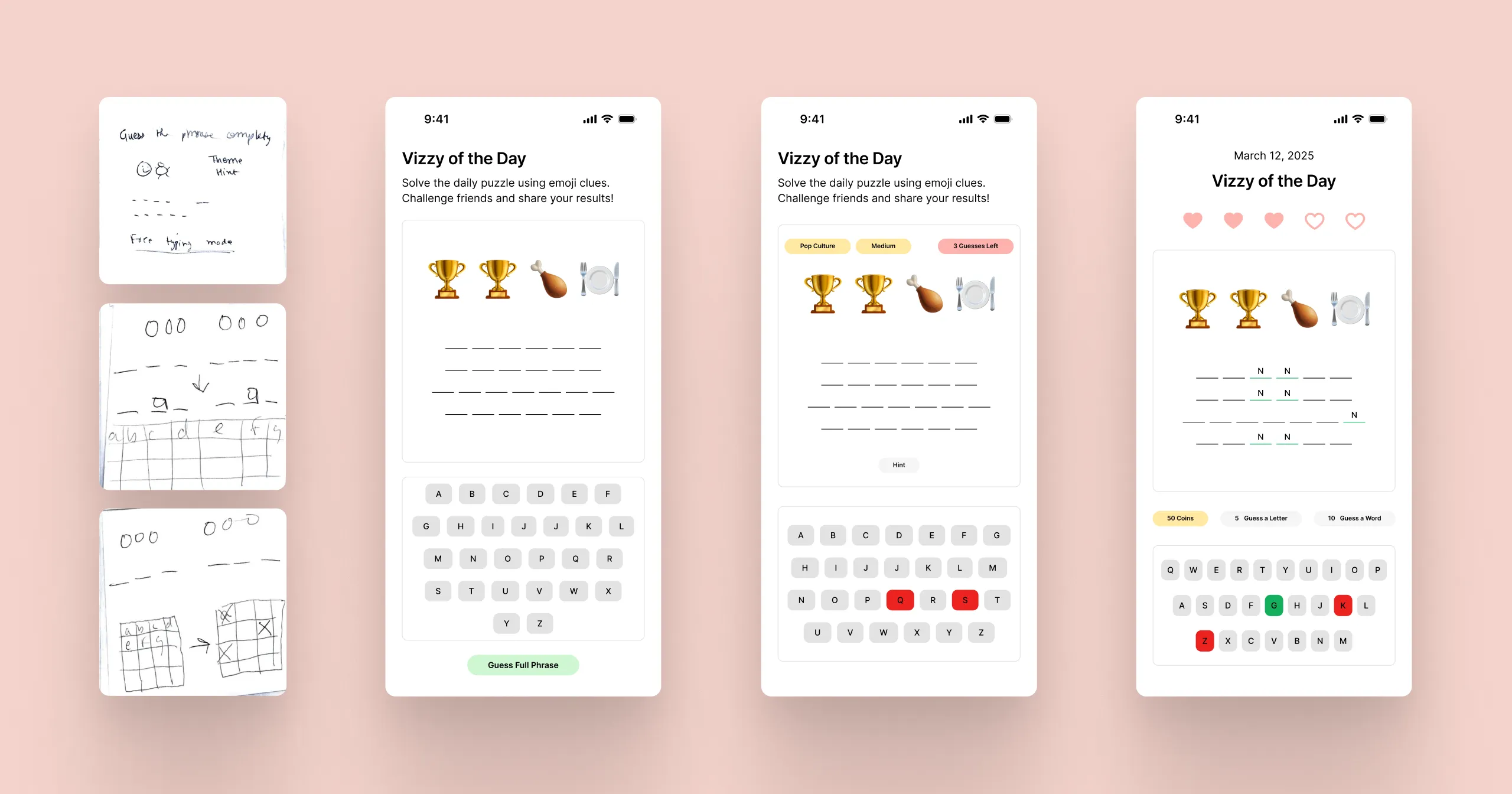
Using the “Crazy 8s” methodology, we rapidly sketched initial concepts to bridge our research requirements with player-centric targets.
By identifying recurring themes across these sketches, we categorized and refined the most promising ideas into low-fidelity wireframes.
This iterative process allowed us to objectively evaluate game modes, narrowing our focus to mechanics that aligned with our goals while discarding those that didn't fit the vision.
Guided by our user personas, we developed design directions that captured the app's core essence, eventually distilling them into the finalized visual identity.
This involved building a comprehensive design system alongside a concise brand style guide that defined our typography, color palette, and art direction.
Central to this identity is our custom mascot, which we integrated into the shop experience to create a more memorable and cohesive journey for the player.
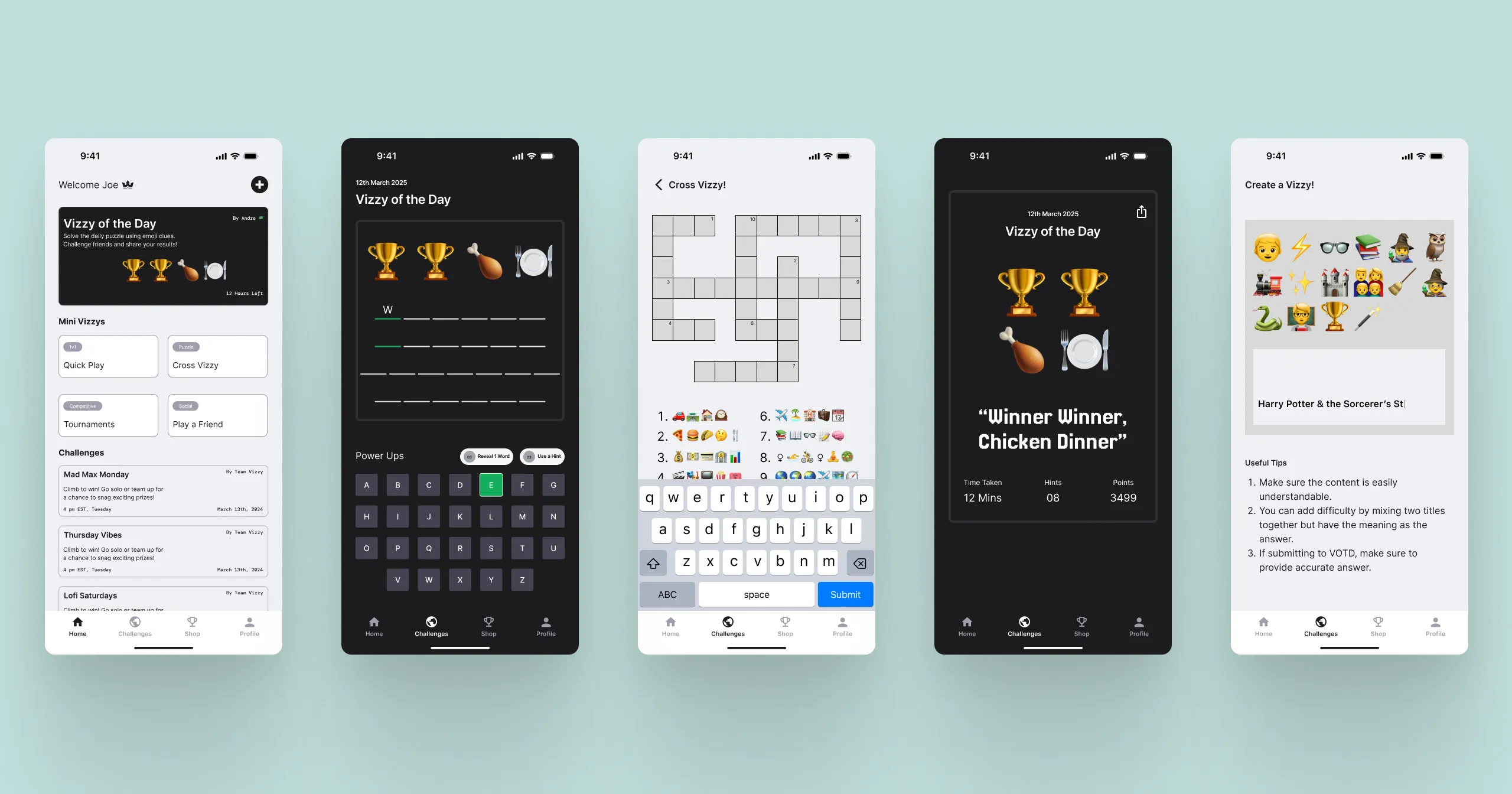
With the user journey defined, we focused on translating our concepts into structural wireframes.
By prioritizing functionality over aesthetics at this stage, we could clearly communicate core features and navigation flows to the Vizzy team.
This phase acted as an essential bridge between ideation and high-fidelity design, helping us audit every necessary screen and interaction required to support the full app experience.
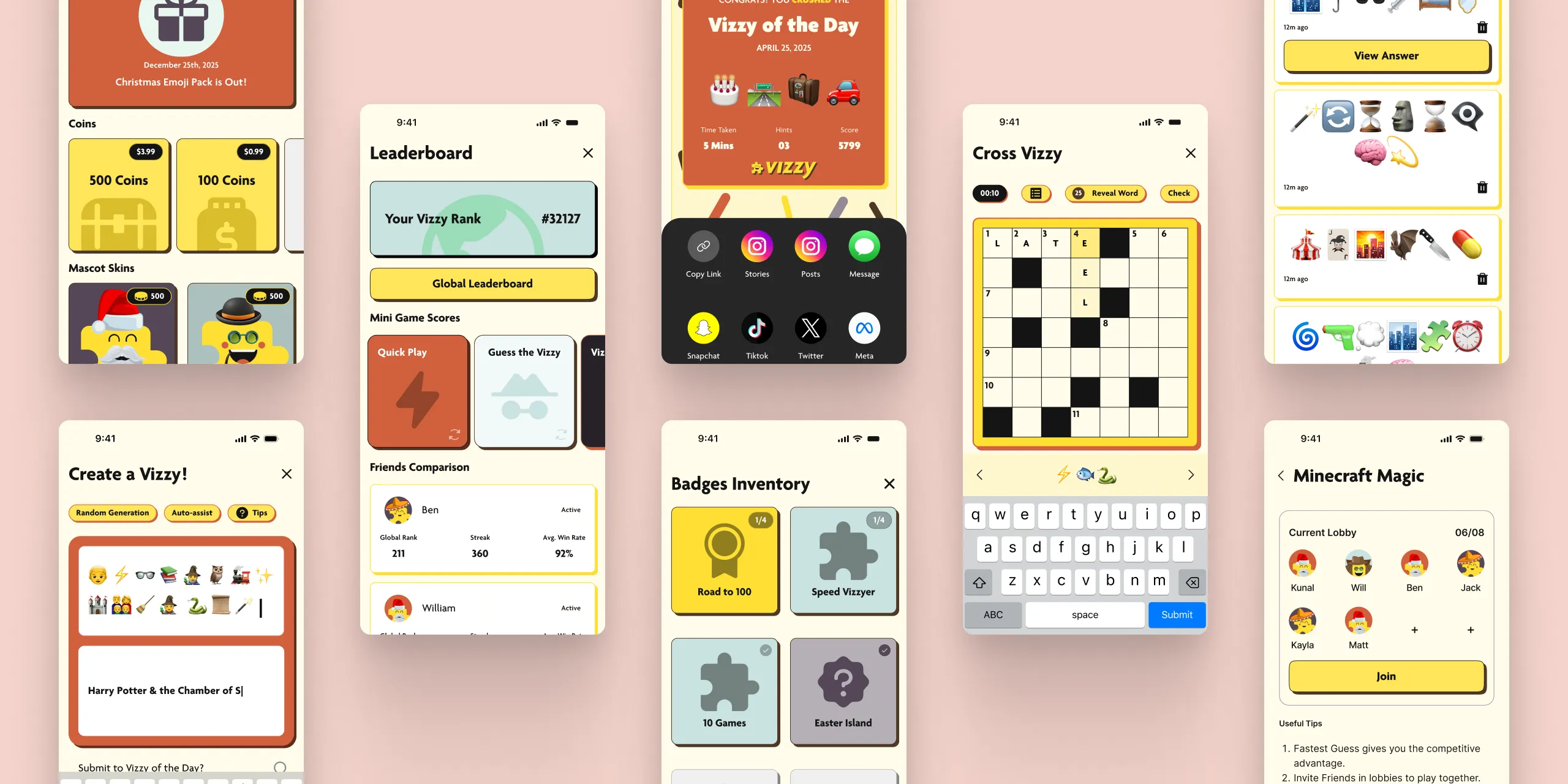
In the high-fidelity phase, we synthesized our design system and brand identity into a polished, market-ready interface.
We moved beyond structural layouts to focus on micro-interactions, depth, and color theory, ensuring the spirit of the app was palpable on every screen.
By applying our custom typography and vibrant color palette to the previously established wireframes, we created a high-energy environment that motivates gameplay.
Every component, from the tactile feel of the buttons to the celebratory animations of the mascot, was crafted to enhance the emotional resonance of the user experience.
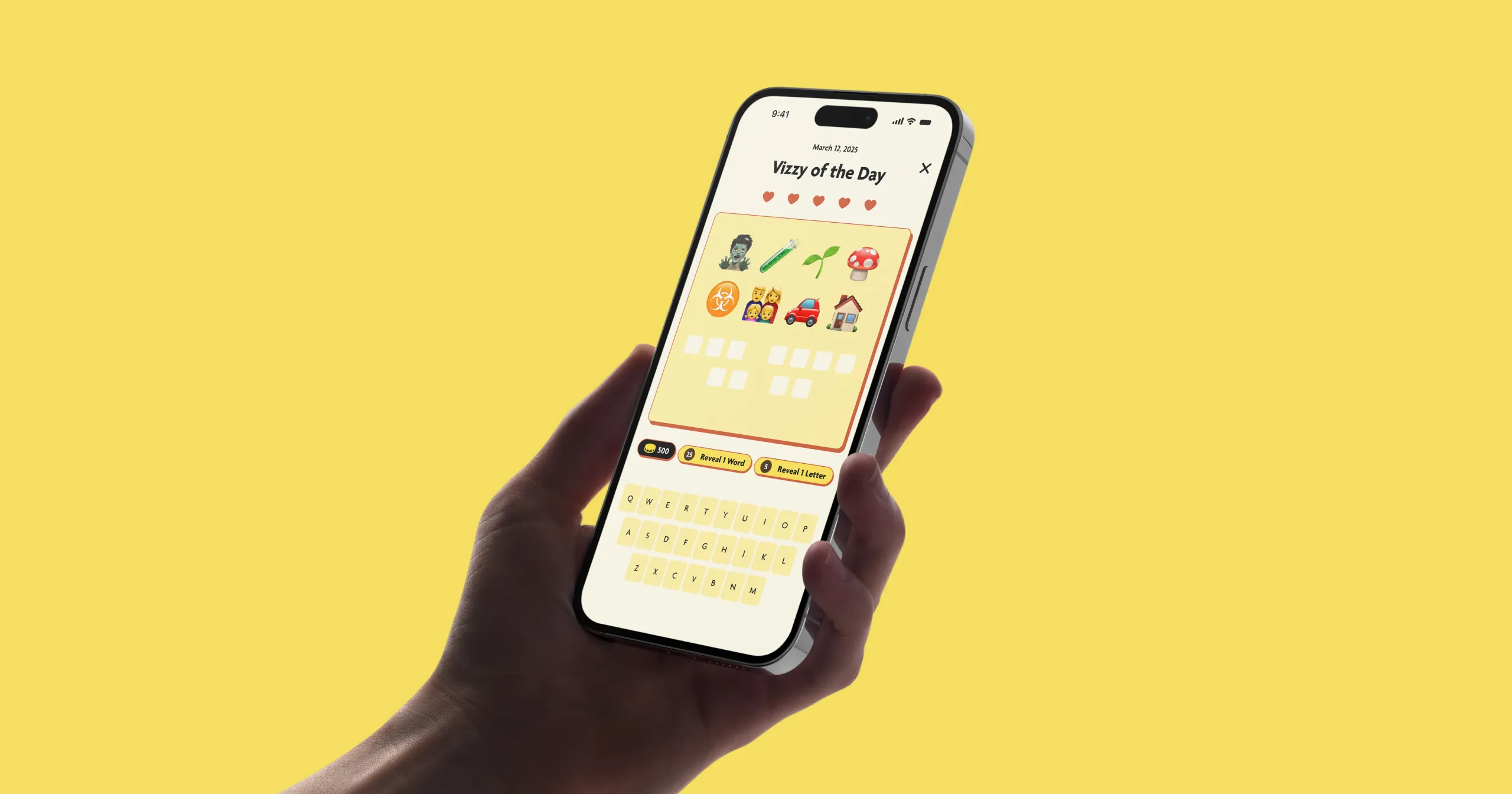
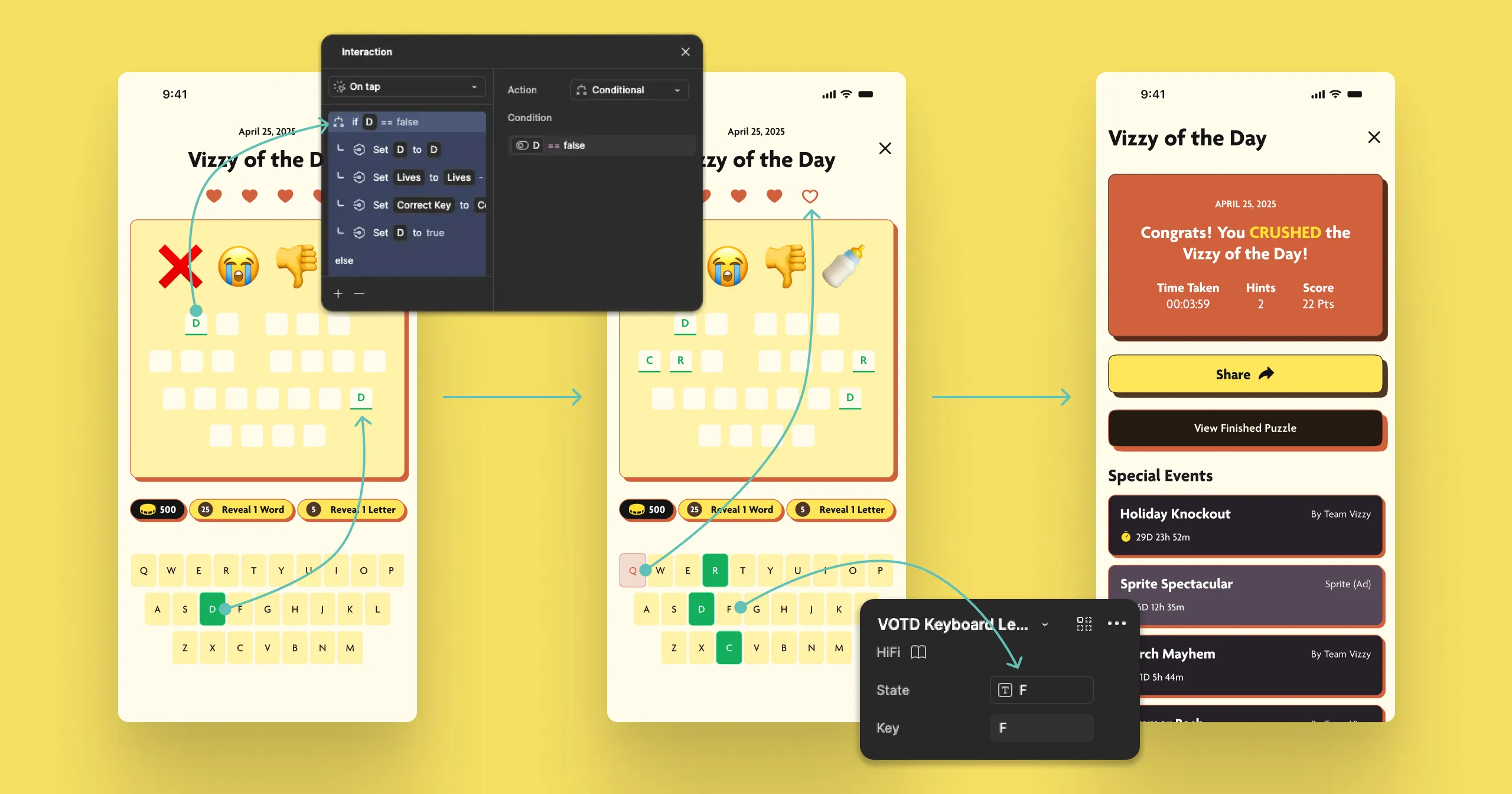
Leveraging Figma’s advanced prototyping capabilities, we developed a fully functional 'Vizzy of the Day' game mode.
By implementing variables and conditional logic, we created a dynamic system that tracks player progress: each letter is assigned a true/false state, where incorrect guesses trigger a 'heart' deduction.
This logic-driven approach allowed us to simulate authentic win/loss states based on player performance. Beyond this core loop, we prototyped a comprehensive end-to-end experience, seamlessly connecting the Home, Feed, Create, Challenges, and Shop modules to simulate a cohesive user journey.
After completing the prototype, we conducted a final set of usability tests to evaluate core game mechanics, the difficulty scaling of our Vizzys, and the overall reception of the brand identity.
The feedback was overwhelmingly positive, validating our design choices and confirming that the interface was intuitive. Users seamlessly navigated the various game modes and successfully engaged with the Vizzy challenges without friction.
As the project moves into its next phase of development, we look forward to seeing Vizzy evolve from a high-fidelity prototype into a market-ready mobile experience.